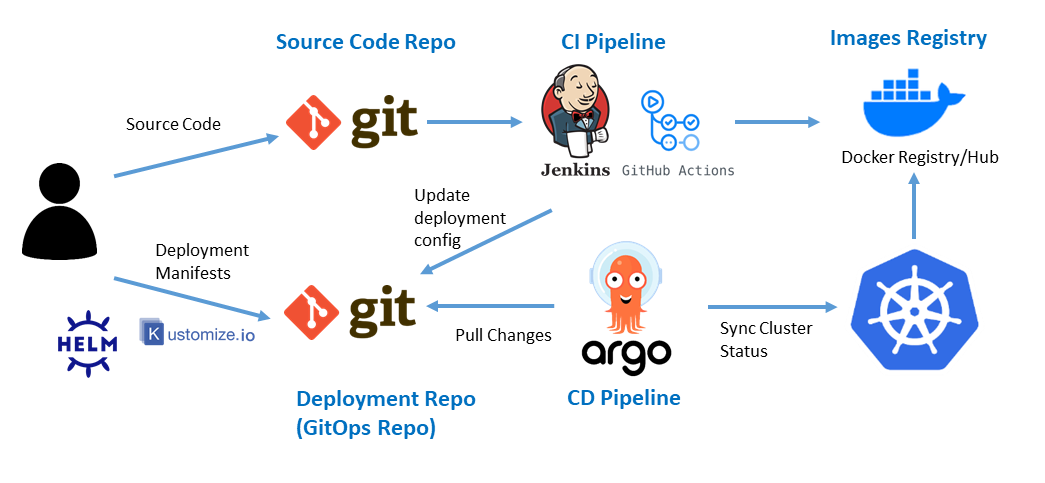
GitOps makes versioned change management easier, but the real value appears when teams use it to define release workflows that are consistent across staging, production, and emergency fixes. A mature GitOps process reduces manual steps and makes rollback a routine capability rather than a last resort.
1. Separate promotion from deployment
Promotion should be a Git change that moves an application from one environment to another. That creates a clear audit trail and makes it obvious who approved each movement. Deployment is then the automated reconciliation step performed by GitOps tooling.
2. Use pull requests for approvals
Approvals in Git are easier to review than ad hoc chat threads. A pull request can capture the reason for a change, the affected services, and the rollout plan. This becomes especially valuable in regulated or high-change environments.
3. Keep recovery paths simple
Rollback in GitOps is usually a matter of reverting the commit and letting the controller reconcile the environment. Teams should test that flow regularly so a rollback does not become a slow, manual process in the middle of an incident.